Approach · 比較 · Understanding the Difference
Not All Paths Through the Dōjō
Lead to the Same Place
There are many ways to encounter martial arts today. This page looks at those different approaches honestly, so you can make a thoughtful choice for yourself.
Return HomeWhy This Matters
The Way You Learn Shapes What You Learn
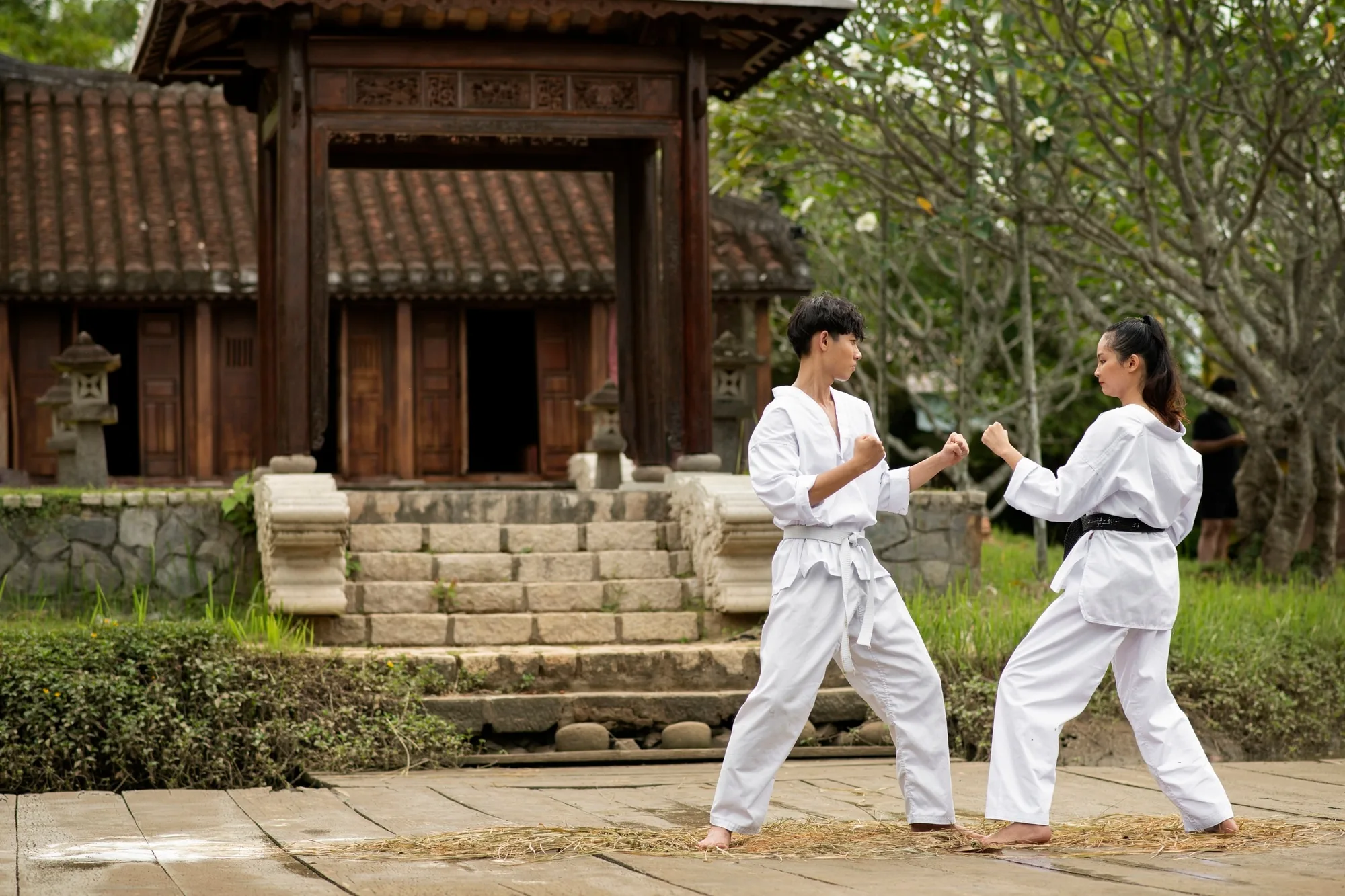
Japanese martial arts have spread widely over recent decades. In that spread, something has sometimes been lost — the customs of the hall, the patience of form, the relationship between practice and daily life. Not every setting that offers martial arts classes is drawing from the same well. We think it's worth understanding what those differences actually are, rather than leaving it as an assumption.
This comparison is not meant to discourage other approaches. It is meant to be honest about what traditional dōjō practice offers that other formats tend not to — and where the difference may matter to you.
Side by Side
Conventional Formats vs. the Dōjō Path
Typical Gym / Fitness Format
Star Weave Loop Traditional Dōjō
Emphasis on physical fitness, cardio, or sport competition. Technique is a means to an outcome measured in performance metrics.
Focus
Emphasis on the practice itself — form, etiquette, breath, and the relationship between body and intention. Progress is inward as much as outward.
Often conducted in large groups with minimal individual feedback. Instruction tends to be demonstration-led with brief correction.
Instruction Style
Small groups only, with patient and direct guidance from instructors who take time with each person at each stage of the session.
Cultural origins are often secondary — or removed entirely — in favour of a more accessible, universal presentation of technique.
Cultural Context
The customs, language, and philosophy of Japanese martial arts are woven into every session. Bowing, terminology, and etiquette are taught from the first class.
Progress is often structured around set timelines, grading cycles, or membership periods that can create pressure to advance quickly.
Pace of Learning
Each person is encouraged to move at their own pace. There is no urgency built into the structure — only steady, honest development.
Often a general-purpose fitness space adapted for martial arts use. Atmosphere is social and open.
Environment
A dedicated dōjō in Tokyo maintained with the specific customs of the hall — shoes removed at the entrance, silence held with purpose, the floor itself a part of practice.
Our Distinctive Elements
What Makes the Difference Here
Rooted in Living Tradition
Star Weave Loop draws from practitioners who have trained within unbroken lines of Japanese martial arts instruction. What is taught here has not been adapted for convenience — it has been preserved with intention.
Unhurried by Design
There are no belt-grading incentives, no upsell pathways, no pressure built into the session structure. Each class is complete in itself. Depth comes from returning, not from being pushed along.
The Whole Teaching, Not Just the Moves
Technique is only one layer. Every class at Star Weave Loop includes the reasoning behind the form — why we bow, how breath connects to stance, what the practice asks of us beyond the body.
Personal Attention, Not Volume
Sessions are kept small by deliberate choice. Instructors know who is in the room, where each person is in their practice, and what the next step for them actually is.
Results Over Time
What the Evidence Suggests
Practitioners trained in contexts that include cultural and philosophical grounding tend to stay with their practice longer than those in purely physical formats.
Small-group instruction with individual correction produces measurably better technical foundation than large-class formats, particularly in the early stages of learning.
The mental and behavioural qualities developed through traditional practice — composure, attention, respect — carry into daily life in ways that exercise-focused training typically does not.
How We Think About These Outcomes
We are not in a position to make claims about what any individual will gain from attending a class. What we can say is that the design of our sessions reflects a considered view about how learning and personal development actually happen — through repetition with understanding, through respectful correction, and through the accumulation of small and honest efforts over time. That is different from a model optimised for throughput or entertainment.
Investment and Value
Understanding What You Are Paying For
The Typical Cost Picture Elsewhere
- —Monthly membership fees that continue regardless of attendance or progress
- —Grading fees layered on top, sometimes with uniform and equipment purchases attached
- —Large class sizes that dilute the value of the time spent with an instructor
- —High dropout rates meaning the investment often ends before the benefit has accumulated
What Star Weave Loop Offers Instead
- —Clear, per-session pricing with no ongoing commitments or membership obligations
- —Every yen pays for focused, small-group time with an experienced and attentive instructor
- —Sessions designed to deliver lasting value beyond the hour — skills, composure, and understanding that stay with you
- —Transparent pricing: from ¥3,400 for a first class to ¥16,800 for a half-day immersion
The Experience Itself
What the Day Actually Feels Like
A Typical Gym or Fitness Class
You arrive, change, wait for the class to begin. There may be twenty or thirty others. The instructor demonstrates; you follow. Corrections, if they come, are brief. The session ends and you leave.
There may be good technique on offer. But it is rarely clear what the practice is asking of you beyond the physical, and the relationship between you and the instructor is typically functional rather than formative.
A Session at Star Weave Loop
You remove your shoes before entering. You bow. You arrive in a small group where the instructor knows you are there and is ready to work with you at your actual level.
The session includes not only movement but the reasoning behind it. You leave with something that does not disappear when the hour ends — a form better understood, an etiquette absorbed, a slightly different relationship with your own attention.
The Longer View
What Stays With You
The most common thing people say after their first class here is that they expected a physical experience and found something with more layers than that. The form they learned continued to settle in the days that followed. They noticed how they stood, how they breathed, how they moved through a door.
That kind of carry-over is not accidental. It comes from the way traditional practice is structured — not as a set of tricks to perform, but as a way of paying attention that, once learned, does not leave you.
A clear introduction to the customs and movements of the dōjō. The satisfaction of having tried something with real depth.
Growing familiarity with form and etiquette. A practice that can be returned to again and again without diminishing returns.
The kind of composure and attention that traditional martial arts practice is known to develop — carried quietly into how you move through everyday life.
Clearing the Air
A Few Things Worth Addressing
"Traditional martial arts are only for experienced practitioners."
"Gym-based martial arts classes are essentially the same thing."
"Traditional practice means rigid, inflexible instruction."
"You need to speak Japanese to attend a traditional class."
In Summary
Why This Approach
If you want physical exercise with a martial arts flavour
There are good facilities in Tokyo that offer exactly that. We would not discourage anyone from finding what works for them.
If you want to understand what is actually there
If you are curious about the philosophy, the customs, the way that practice and attention meet in the dōjō — Star Weave Loop is a considered and unhurried place to find out.
If you are new and uncertain
Starting somewhere that treats beginners with patience and respect matters more than you might think. The introductory class here is specifically for you.
If you want something that continues beyond the class hour
Traditional practice leaves something behind. That accumulation, session by session, is quietly one of the most valuable things the dōjō offers.
If This Has Answered Something for You
The next step is simple. Write to us and let us know which class interests you. There is no pressure and no commitment required — just a door, open and ready.
Send a Message